Tehran hosting intl. fisheries exhibition
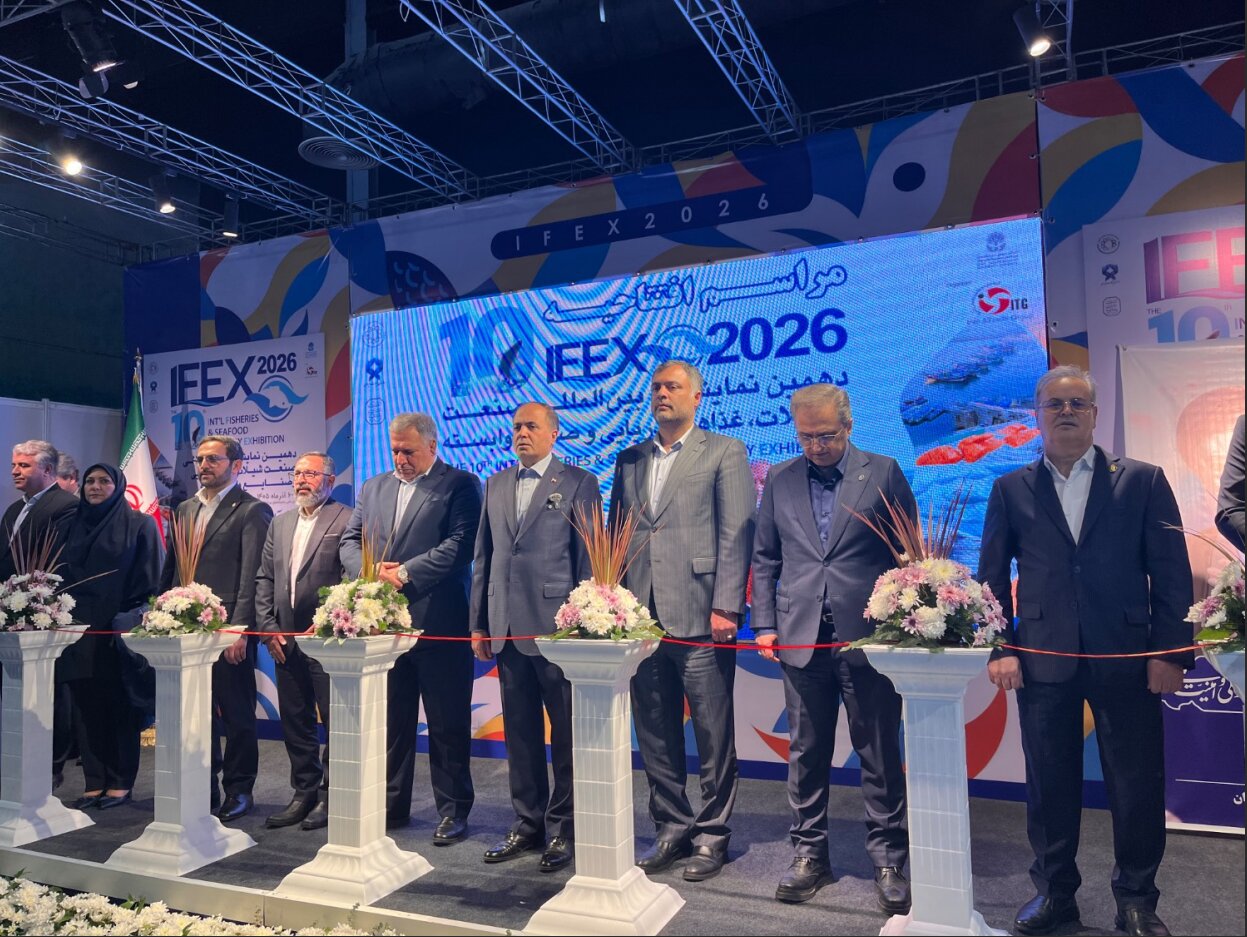
TEHRAN- Tehran is hosting the 10th International Fisheries, Aquaculture, Fishing and Related Industries Exhibition (IFEX 2026), which opened on Friday at the Tehran Permanent International Fairgrounds with the attendance of the Minister of Agriculture.
This year, the event began with a focus on the resilience of fishermen in the southern and northern regions and the manifestation of the dynamism of the sea-based economy.
The 10th International Fisheries, Aquaculture, Fishing and Related Industries Exhibition (IFEX 2026) opened while this edition is hosting participants and fishermen from across the country—from Bu Musa, Sirik, Jask and Qeshm to the southern and northern provinces—and has displayed a different image of resilience in the production chain.
At the opening ceremony, Hamzeh Rostamipour, Deputy Agriculture Minister and Head of the Iran Fisheries Organization, honored the memory of the martyrs of the Islamic Revolution, fishermen martyrs, and the martyrs of resistance, and referring to the country’s critical conditions, stated: “Our country is not going through easy days; we have wartime and difficult days, but despite these conditions, the 10th fisheries industry exhibition has been held with significant advantages over last year, including product diversity, export development, and modern production methods.”
The Head of the Fisheries Organization, referring to the sacrifice of more than 40 martyrs and missing persons in the fisheries sector since March and the beginning of the third imposed war, added: “The peak of the country’s fisheries work was manifested in these days; when fishermen’s catch and shrimp farm activity in Hormozgan, Bushehr, Khuzestan and Chabahar did not stop. Even when the enemy targeted surrounding bridges, trucks carrying aquatic feed were moving. These dear ones have come from across the country to say that we are not war-stricken to become a burden on big cities, but we have taken the responsibility of food security and employment seriously with heart and soul.”
Rostamipour, presenting statistics on the sector’s achievements, stated: “Despite all the challenges, our fisheries exports have increased by more than 50% compared to before the war. Also, in the current year, thanks to the efforts of fishermen and in compliance with IOTC (Indian Ocean Tuna Commission) requirements, distant-water catch has grown by more than 35%.”
Emphasizing the key role of investment in the development of this industry, he noted: “Before the war, 34,000 billion tomans had been invested in the fisheries sector; this figure reached 67,000 billion tomans last year, and so far this year more than 40,000 billion tomans of new investment has been registered, 90% of which is private-sector capital, and a major share of it belongs to the country’s southern provinces—a province that in these difficult conditions has brought its capital into the field for development.”
The Head of the Fisheries Organization also referred to the latest status of shrimp production and said: “Today alone, more than 40,000 tons of shrimp have been harvested from farms, and more than 60,000 tons more is on the way, which is equal to all pre-war harvests. My request is that you do not see fisheries merely as a production agency.”
According to statistics presented at the exhibition, the country’s total aquatic production has reached more than 1,566,000 tons (including more than 733,000 tons in aquaculture), and Iran, with an annual production of about 270,000 tons of rainbow trout, still holds the world’s first place in producing this species.
Later in the ceremony, the Minister of Agriculture and members of parliament, while visiting the booths and meeting fishermen and producers from coastal areas, sat down with their concerns, including the sustainable supply of inputs, development of the cold chain, and obstacles to the repatriation of foreign currency earnings.
Gholamreza Nouri, the Minister of Agriculture, speaking to reporters, referred to the record-breaking exports of Iran’s fisheries products under sensitive security conditions and sanctions, and announced the attraction of large investments by the private sector in this field.
While emphasizing the priority of energy supply for the agricultural sector, he stressed the strategic role of knowledge-based companies in achieving full self-sufficiency.
The Minister of Agriculture, in remarks about the performance of the fisheries industry, announced the sector’s significant achievements in facing international challenges and said: “At a time when the country was facing sanctions, blockade and security fluctuations in fisheries activity areas, contrary to analysts’ expectations that predicted a crisis, we witnessed a jump in exports. So far, 180,000 tons of fisheries products have been exported, a figure that under these conditions shows the resilience and authority of our producers.”
Nouri, paying tribute to fishermen who sacrificed their lives in the path of meeting the country’s needs, added: “Just as the armed forces are at the front line of defense, our fishermen also stood at the front line of food security with all their strength for the country.”
The Minister of Agriculture, analyzing the investment trend in this industry, emphasized the key role of the private sector and said: “Statistics show that in the first half of the current year alone, more than 40,000 billion tomans of investment has been attracted in the fisheries sector. This volume of investment, mainly made by the private sector, indicates high profitability and desirable productivity in this production chain.”
He added: “The government and the Ministry of Agriculture, by identifying suitable areas on the northern and southern coasts of the country, have provided the necessary infrastructure to attract investors. Also, in cooperation with the banking system, necessary facilities have been considered for the development of these areas and support for investors.”
In the research and development section, the senior ministry official announced scientific progress in the fisheries sector and said: “By supporting knowledge-based companies and working closely with research institutes, we have achieved major successes; including that in the field of importing rainbow trout eggs, we are now on the path to full self-sufficiency. The ministry welcomes all growth centers and universities for a technological leap in this industry.”
The Minister of Agriculture, referring to challenges in the energy sector, emphasized the policy of optimal consumption but at the same time insisted on the priority of supplying fuel to farmers and said: “Although energy consumption management is a general principle, given the vital importance of agriculture in food security, special emphasis has been placed on supplying the energy needed by this sector.”
He stressed: “Regarding the recent challenges in fishermen’s fuel quota, the necessary follow-ups are underway so that this issue will be fully resolved soon.”
MA
Leave a Comment